
Electrical Panel Upgrades: A Quad Cities Homeowner’s Guide
Published
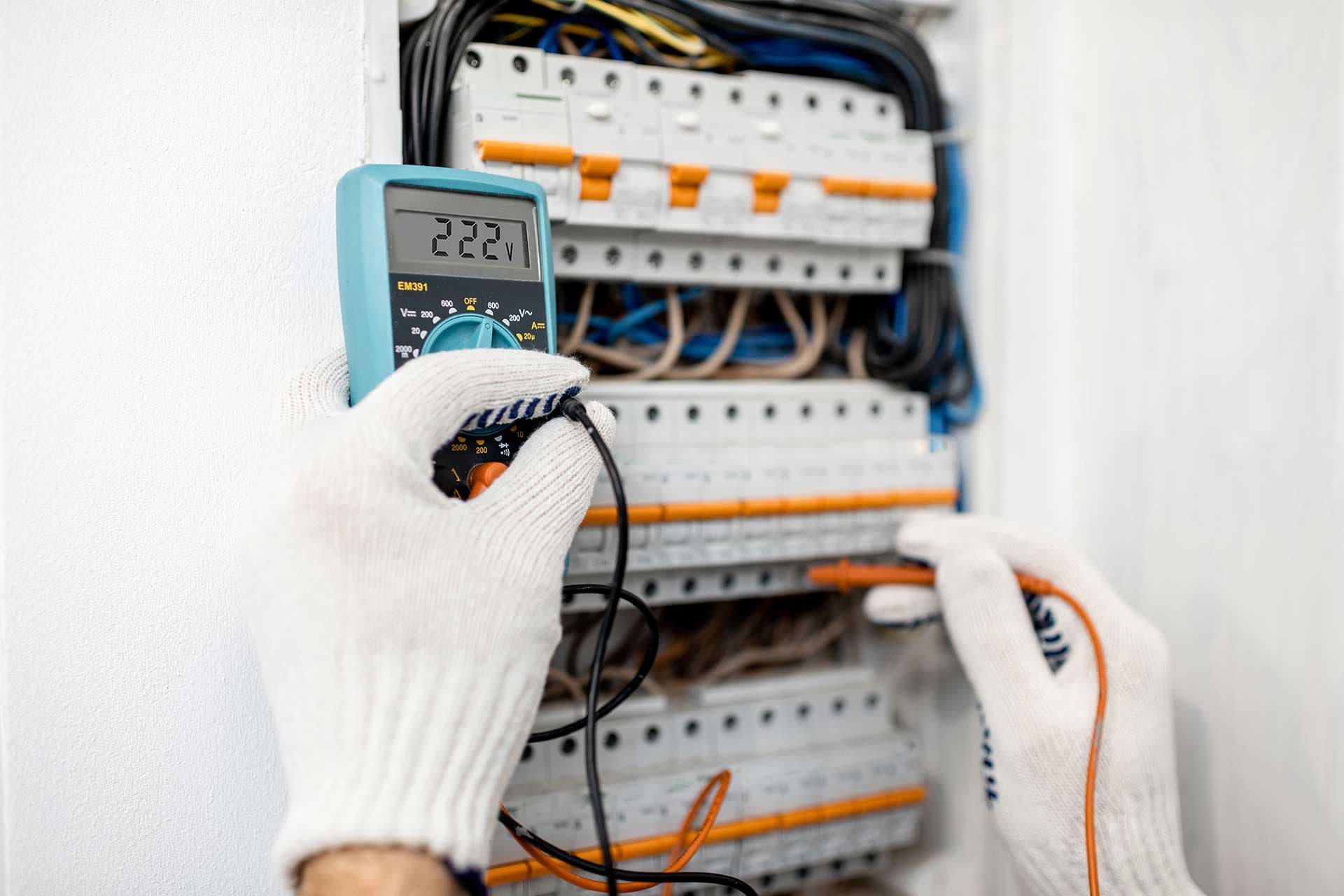
Most homes need a panel upgrade when the service is undersized for what the household actually runs, when the panel is full, or when it shows heat damage. The work usually takes one day and requires a permit and a utility disconnect.
How do you know the panel is the problem?
A panel that is running out of room or out of capacity usually tells you first, and it tells you under load. The symptoms show up when the dryer, the window unit and the microwave are all drawing at once, and they read as an inconvenience long before they read as a hazard. Knowing which signs point at the panel and which point at one tired circuit is what keeps you from paying for the wrong work.
- A breaker that trips whenever two large appliances run together, rather than one that trips at random
- No empty spaces left in the panel, or tandem breakers stacked in to make room that was not there
- A fuse box, or a breaker brand that no longer has supported replacement parts
- Scorching around a breaker, a cover that is warm to the touch, or a burnt smell at the door
- Lights across the whole house that dip when the furnace or a well pump starts
- A 60 or 100 amp service in a house that has since gained central air, a finished basement or a shop
If the panel is warm, smells burnt or shows scorch marks, stop using the circuits it feeds and call us. Do not take the cover off. The panel is live behind it, and whatever caused the heat is still there.
What does an upgrade actually involve?
- Load evaluationWe add up what the house draws, appliance by appliance, and size the new service from that calculation instead of from the rating stamped on the panel that is coming out.
- Permit and utility coordinationThe electrical permit is filed before anything is opened up, and the disconnect and reconnect are booked with the utility for the day of the change so the outage lands in one planned window.
- Panel and service replacementThe old panel comes out and the new panel, breakers, grounding electrodes and bonding go in. Where the mast, weatherhead, meter socket or entrance conductors are undersized or storm-damaged, they are replaced at the same time.
- Labelling and testingEvery circuit is traced back to what it feeds, written on the schedule and tested. Before we leave you get a walk through of the finished panel and the main disconnect, so you know what to switch off and where.
How long does it take, and how long is the power off?
A straightforward residential upgrade is a one-day job. We start early because the utility window sets the pace of the day: the service is disconnected, the panel and entrance are changed, the inspector signs it off, and the utility reconnects. If the entrance also has to be replaced, or the panel is moving to a different wall, plan on a second day.
The power is off for most of the working day rather than for a few minutes. Plan around that. Keep the refrigerator and freezer shut, run a load of laundry the night before, and tell us up front if there is a sump pump you cannot lose, a home office that has to stay online, or medical equipment in the house. Those are the details that decide whether we bring temporary power for part of the day.
What drives the cost of the work?
| What changes the price | Why it matters |
|---|---|
| The size of the new service | A 200 amp service needs larger conductors, a larger meter socket and a heavier entrance than the 100 amp service it replaces. |
| Whether the entrance and meter socket change too | Swapping a panel behind sound entrance gear is a much smaller job than a full service change with a new mast and riser. |
| Where the panel sits and how it is reached | A panel on an open basement wall is quick work. One boxed into a finished closet, buried behind shelving or hung on an outside wall in January is not. |
| How many circuits move across | Each existing circuit is landed, labelled and tested, and conductors cut too short have to be extended properly in a junction box rather than stretched. |
| What the change brings up to code | Grounding electrodes, bonding at the water line and missing arc-fault or ground-fault protection are commonly corrected as part of the upgrade. |
We put the scope in writing before the work starts, and if something behind the wall changes it, you hear about it that day rather than at the end.
What happens once the new panel is in?
The inspector signs off the installation, the utility reconnects, and you keep the permit record. Our workmanship carries a lifetime warranty, so if a connection we made ever loosens, that is ours to put right. Keep the labelled schedule on the door: it is the difference between switching off one bedroom and switching off the house next time somebody changes a fixture.
A panel change is also the cheapest moment to add whole-house surge protection, because the device takes a breaker space of its own and the leads stay short, which is what makes it work. What a new panel will not do is cure a branch circuit that was misbehaving before. A receptacle that arcs or a run with a loose neutral is electrical repair work, and we look at it as a separate job rather than hiding it behind new equipment.