Whole-House Surge Protection
Surges do not only come from lightning. Most of them are made inside the house, every time a well pump, a compressor or a furnace blower shuts off. An arrestor at the panel clamps the large events before they reach the branch circuits, and a plug-in protector deals with whatever gets past it. Together they save control boards, which are now the costly part of nearly every appliance.
How the layers work
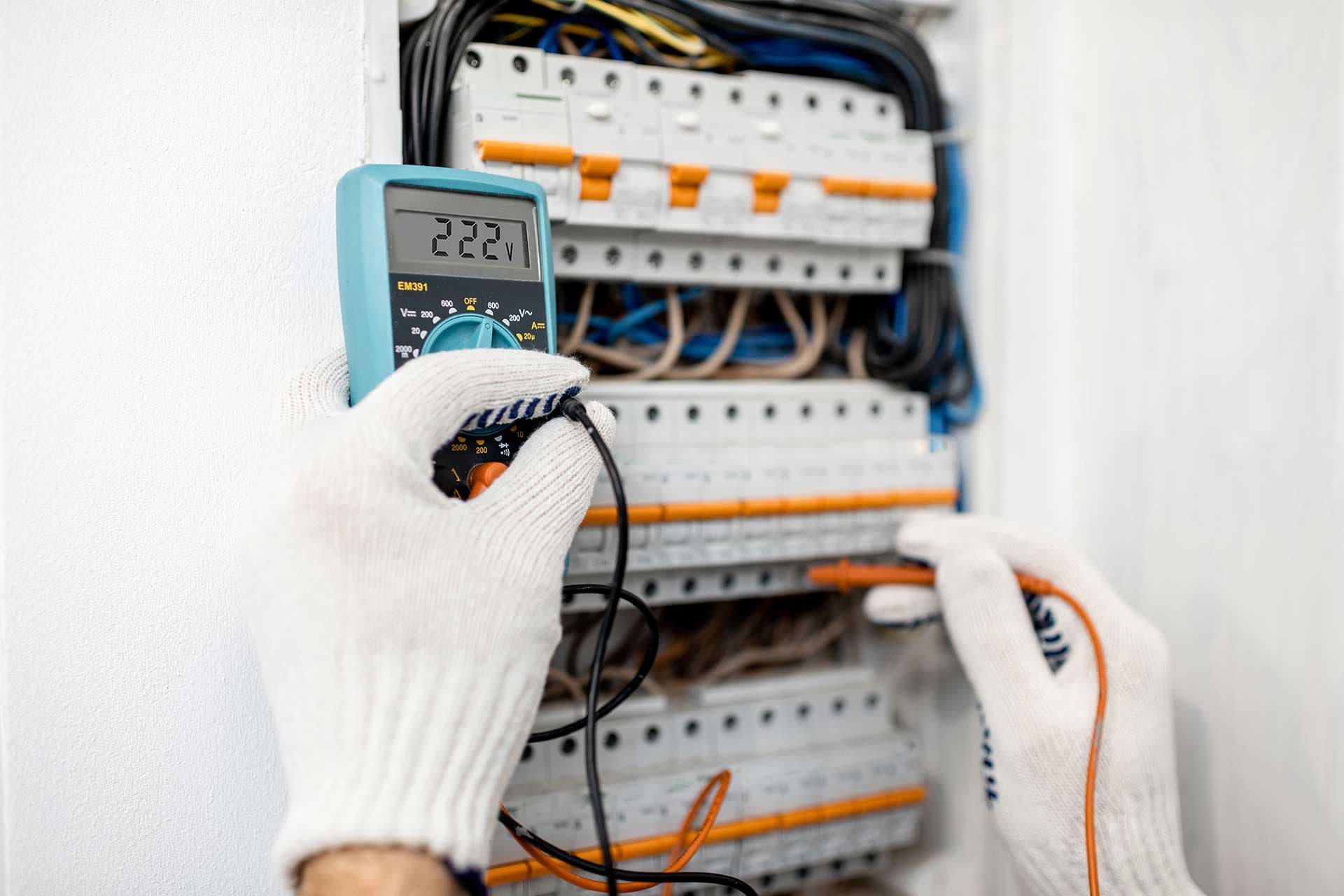
- At the panelA service-entrance arrestor takes the first and largest hit and diverts it to ground before it gets out onto your circuits.
- At the sensitive equipmentA point-of-use protector at the furnace, the pump control, the television or the office gear clamps the smaller residual energy.
- Grounding underneath bothNeither layer works better than the ground it dumps into, so we check the grounding electrode and the bonding while we are in the panel.
What usually dies first
- Furnace and air handler control boards
- Well pump and sump pump controllers
- Garage door openers and their logic boards
- Televisions, routers and anything on a plug-in power supply
- LED drivers in recessed fixtures, which fail as flicker rather than darkness
- Range, washer and dishwasher electronics
A surge device is a consumable
An arrestor absorbs energy until it cannot any more, and then it quietly stops protecting anything. Good units carry a status light or an audible alarm for exactly that reason. If yours has a dark indicator, it is a spent part sitting in a live panel and worth replacing rather than trusting.
Frequently asked questions
Does a whole-house surge protector stop a direct lightning strike?
No. Nothing fitted at a panel handles a direct strike. It handles the far more common events: nearby strikes, utility switching, and the surges your own motors create.
Do I still need power strips if the panel is protected?
Yes, for the equipment you care about. The panel device cuts the big peak, and the plug-in device catches the remainder, which is still enough to kill a circuit board.
Where does a surge arrestor get installed?
At the service panel, on a breaker of its own, with the leads kept as short as we can make them. Lead length matters more than most people expect.
How do I know if my surge protector has worn out?
Check the indicator. A green light means it is still clamping. A dark or red light means it has used itself up and should be swapped out.
Will a surge device lower my power bill?
No, and any device sold on that promise is not doing what it claims. Surge protection protects equipment. It does not change what the house draws.
Available in
Related services
Read more
Need an electrician in the Quad Cities?
24-hour emergency service available