480-Volt Three-Phase Power & Transformers
New equipment arriving on a 480-volt nameplate is usually what starts this conversation. The work runs from the utility side through the service, the transformer, the distribution panel, the feeders and the disconnect at the machine. We install 480-volt three-phase services, step-down transformers for 208 and 120-volt loads, and the circuits that tie the two together.
Typical scope
- Load and capacity checkWhat the new equipment draws, what the building already carries, and whether the existing service can take it or has to grow.
- Utility coordinationThree-phase availability at your address is a utility question, and the answer shapes the design. We start there rather than after the conduit is in the ground.
- Transformers and distributionStep-down transformers, secondary panels, grounding, and feeders sized for the length of the run as well as the current.
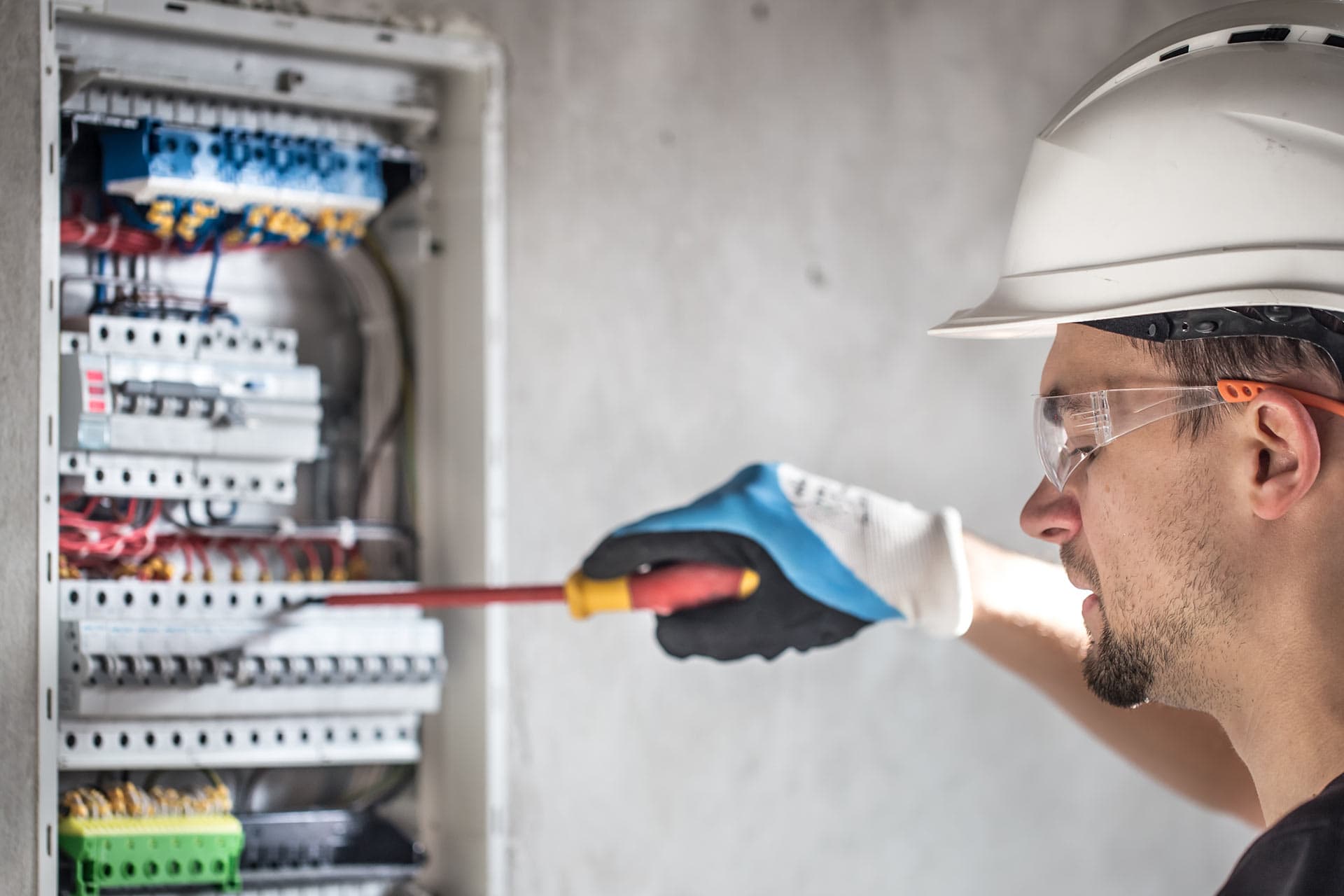
- Machine connectionA disconnect at the equipment, rotation confirmed before the motor is loaded, and the whole run labelled.
Phase rotation and why it matters
Connect a three-phase motor with two legs swapped and it runs backwards. On a pump or a compressor that can wreck the machine in seconds. Rotation gets checked with a meter before equipment is loaded, every time, on a new installation and after any work on the feeders.
When single-phase is the better answer
Not every building should chase three-phase. Where the utility cannot deliver it without major work, a single-phase service with a phase converter for one machine sometimes makes more sense. We would rather have that conversation before the equipment order is placed than afterwards.
Frequently asked questions
How do I know if my building has three-phase service?
Look at the main panel. Three hot legs and a much larger disconnect usually mean three-phase. A photo of the panel label and the meter tells us for certain.
Can three-phase power be brought into a building that does not have it?
Sometimes. It depends entirely on what the utility has at the street and what bringing it in would involve. That availability check is the first call we make.
What does a step-down transformer do?
It takes 480 volts down to 208 or 120, so the same service can feed heavy equipment and ordinary receptacles and lighting in the same building.
Why does my new machine run backwards?
Two of the three phases are reversed. It is corrected by swapping a pair of conductors at the disconnect, then verifying rotation with a meter before the machine is put under load.
Do you size the feeder straight off the nameplate?
Off the nameplate and the length of the run. Long feeders need upsizing for voltage drop, and that is the detail most often missed when equipment moves.
Available in
Related services
Read more
Need an electrician in the Quad Cities?
24-hour emergency service available