
Home Electrical Troubleshooting: How to Find the Fault
Published
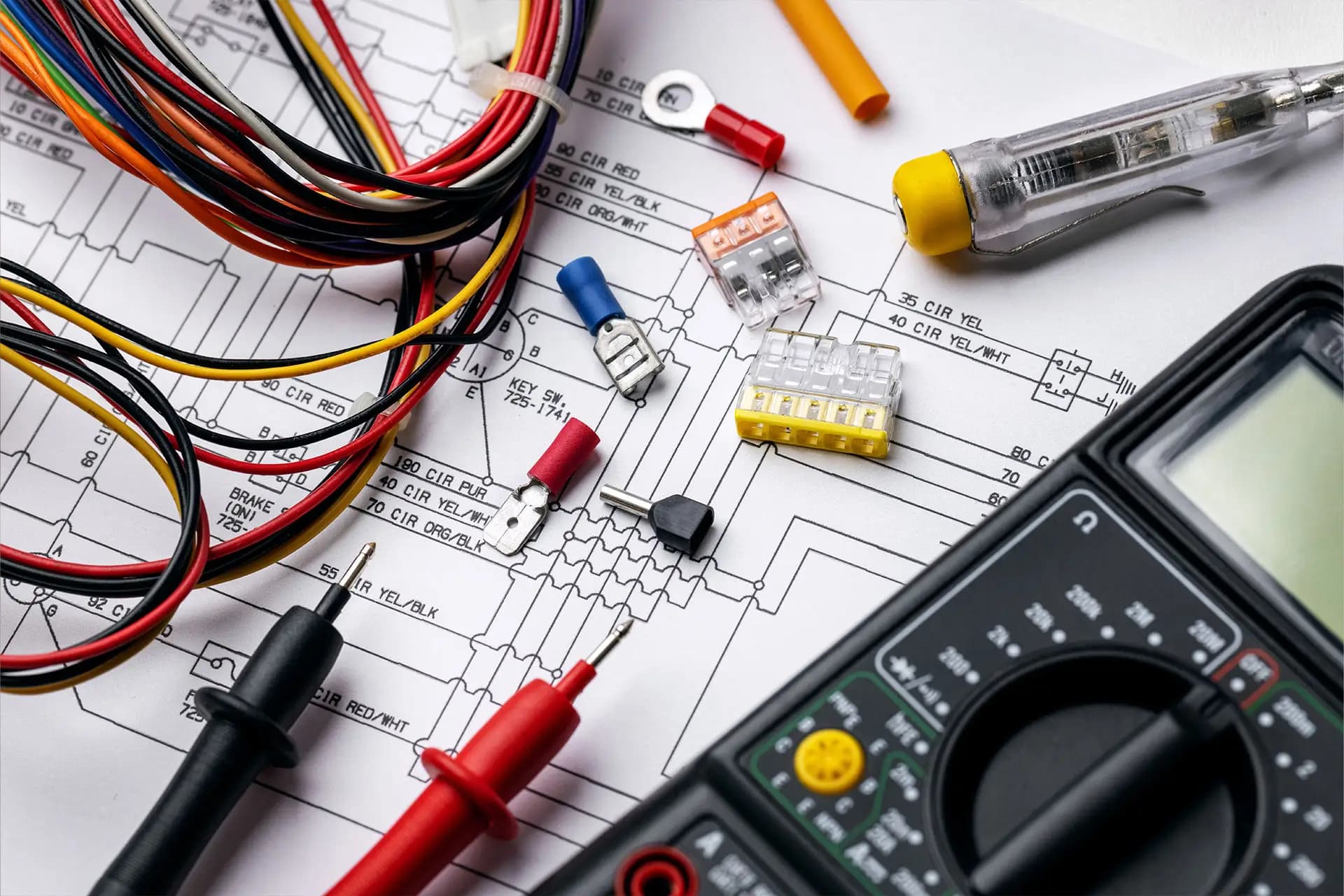
Start with what still works. Note which outlets, lights and appliances are dead, whether a breaker has moved, and when the fault appears. That pattern points at one circuit, one device or the service itself, and it is the first thing an electrician asks for.
What can you safely check yourself?
Five minutes of looking, with nothing opened up, settles a surprising number of calls. None of this needs a cover off or a tool in your hand.
- Look at the panel. A tripped breaker usually sits between on and off rather than fully off, and it will not reset until it is pushed firmly to off first.
- Press reset on every ground-fault outlet in the house. One in a bathroom, garage or on the porch often protects outlets in rooms nowhere near it, including a garage freezer that has been quietly warming up.
- Look outside. If the street is dark, the fault is the utility. If your house is dark and the neighbours are lit, it is on your side of the meter.
- Unplug whatever was running when the circuit died, then reset once. If it holds until that appliance goes back on, the appliance is the fault, not the wiring.
- Write down the pattern: which rooms, which devices, what time of day, and whether it only happens in wet or windy weather.
One reset is a test. A second and a third are not. A breaker trips because it is detecting something it does not like, and forcing it back on repeatedly is how a contained fault becomes a fire.
What does a breaker that will not stay on tell you?
There are only a few reasons a breaker keeps letting go. It is carrying more current than it was sized for, which is an overload. Two conductors are touching that should not be, which is a short. Current is leaking to ground somewhere, which is a ground fault. Or the breaker itself has aged and now trips below its rating. We measure the actual draw on the circuit before deciding which, because the fix for each is completely different and three of the four are not cured by a new breaker.
Arc-fault breakers add one more possibility. They watch for the signature of an arcing connection, and they will trip on a genuine fault in the wall, on a worn cord, and sometimes on a motor that produces a similar signature. Swapping one out to stop the nuisance is the wrong move until the circuit has been tested, because the times it is right are the times that matter.
Why do some outlets go dead while the breaker stays on?
Receptacles are wired in a chain. Power arrives at the first one, passes through its terminals, and carries on to the next. When a connection inside that chain fails, everything downstream of it goes dead while the breaker sits happily on, because nothing has drawn enough current to trip anything. The dead outlets are the symptom. The failed connection is usually one box back from where the trouble starts.
The usual culprits are push-in terminals on the back of a device, a wire nut that was never twisted down, and a neutral that has worked loose in a junction box. All three heat up as they fail, which is why a device plate that feels warm is worth reporting even when everything still works. We start at the panel and work along the run with a meter rather than guessing which box to open, and most single-circuit faults are found and repaired in one visit.
Which symptoms mean stop and call tonight?
Some faults can wait for a scheduled visit. These cannot. Switch the circuit off at the panel if you can do it safely, then call: our emergency electrician service answers around the clock, and the owner often picks up himself.
- A burning or fishy smell at an outlet, a switch or the panel
- A device, plate or cord that is hot or discoloured
- Buzzing, crackling or sizzling from a wall, a fixture or the panel
- Sparks that are more than the brief flick you get unplugging a load
- Half the house dark while every breaker is on, which points at the service rather than a circuit
- Water in the panel, or a panel that has been rained on through a damaged mast
- Any service wire pulled loose from the house, which needs the utility called first
When is it a repair, and when is the wiring the problem?
Most calls end as electrical repair: one failed device, one bad splice, one breaker, one length of damaged cable. The circuit is sound, one component on it is not, and it is back in service the same day.
It turns into rewiring when the same circuit keeps producing new faults in new places. Brittle cloth insulation that cracks off the copper whenever a device is pulled forward, two-prong outlets with no ground anywhere on the run, splices made outside a box, or a circuit that has been extended across three rooms and an addition until one breaker feeds half the house. At that point every repair buys a few months. We will tell you which of the two you have, and if a room is worth rewiring rather than patching again, you will hear that before we start.