Storm-Damaged Service Mast Repair: A Typical Davenport Project
After a straight-line wind event, the piece that fails on a Davenport house is usually the service mast and weatherhead where the overhead drop lands. That equipment belongs to the property rather than to the utility, and the power stays off until it has been repaired and inspected. This walkthrough covers how a typical mast repair runs, from the first phone call to the meter going back in.
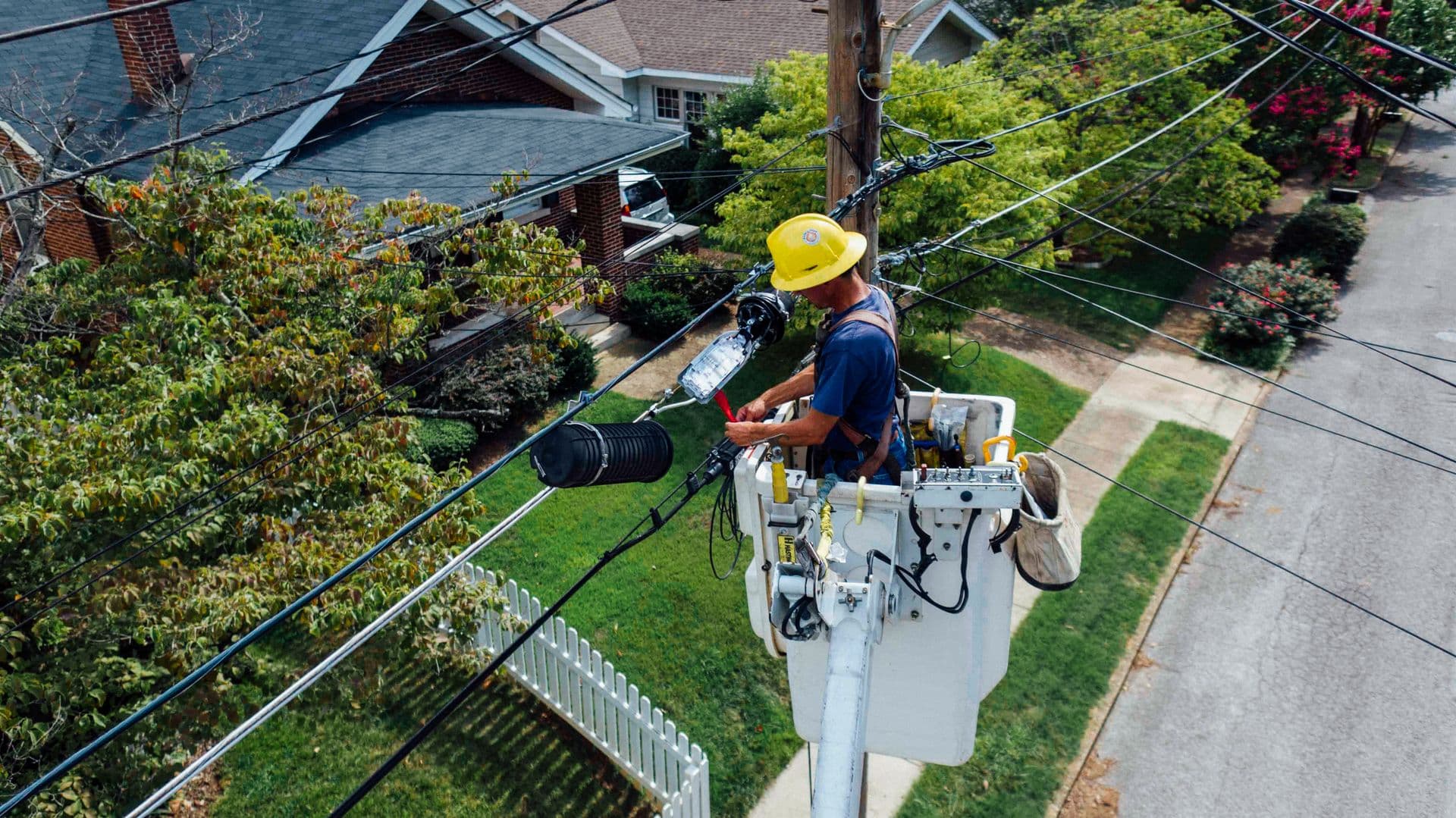
This is a walkthrough of a typical project of this kind, not a specific customer’s job. Your own scope is confirmed on site before any work starts.
What this job covers
The repair covers everything on the customer’s side of the connection: the mast or riser, the weatherhead, the service entrance conductors down to the meter socket, the socket itself, and the panel behind it where water or heat reached that far.
- A new mast and weatherhead, braced or guyed for the pull the drop puts on it
- Service entrance conductors replaced, because conductors that have been pulled or scorched are not put back into service
- The meter socket replaced when the jaws, the lugs or the enclosure are damaged
- Panel, breakers and devices inspected for water and heat damage instead of being assumed sound
- Grounding and bonding checked while the service is open, since a surge finds every weak connection in a house
How the work runs
- Make it safe and get the utility movingThe first call is about safety: what is down, what is still energised, and who needs to stay away from it. Emergency service runs 24 hours, and most Quad Cities calls are reached in under an hour.
- Utility disconnectThe drop is disconnected before anything is touched. Public Works is clear that the service drop and the meter belong to MidAmerican Energy, and everything from the meter inward is ours to repair.
- Find out what is actually damagedA mast that only looks bent can have a cracked weatherhead and conductors pulled at the connection above it. The entrance is opened and looked at, rather than repairing the visible part and leaving the rest in the wall.
- Repair the mast and entranceThe new mast, weatherhead, conductors and socket go in, with bracing sized for the pull of the drop and fixings landed in sound timber. Where the panel took water, it is replaced rather than dried out.
- City inspectionThe city requires a permit for this work and requires the contractor to take it out. The repaired service is inspected before the utility will put the drop back on it, so the inspection is booked as soon as the work is ready.
- Meter reset and power back onThe utility reattaches the drop and sets the meter. We stay to check the service under load and to walk the panel with whoever lives there before leaving.
Things that move the scope
Storm work differs from planned work in one important way: the sequence is not entirely ours to control. Two other parties, the utility and the city inspector, have to act in that order before a house has power again. What we can control is that our part is finished and ready the moment each of them arrives.
- When a whole street is down the utility is triaging, so a service repaired and inspected early is a service reconnected early
- Water that reached the panel is not a wipe-and-dry situation; wetted breakers and busbars are replaced
- A mast torn out of a rotted rafter is a carpentry problem as well as an electrical one, because the fixing has to land in sound wood
- A surge that destroyed devices and appliances but left the service standing is a separate look at the branch circuits
Never touch a downed conductor or a hanging drop, and never assume it is dead because the house is dark. Call the utility, call us, and keep everyone away from it until someone arrives.
Storm Damage Repair questions
The mast, the weatherhead, the entrance conductors and the meter socket are part of the property, so they fall to the owner. The utility owns the drop and the meter itself.
Because a damaged service is not safe to energise. The repair has to be made and inspected by the city first, and the utility reconnects only after that has happened.
The making-safe can be, and we answer emergency calls around the clock. Reconnection still waits on the utility and on the city inspection during working hours.
No. A mast can look straight and still hide a cracked weatherhead or conductors pulled at the connection, which is why the entrance is opened up and examined rather than eyeballed.
This walkthrough is one example of Storm Damage Repair across the Quad Cities, and of the electrical work we do in Davenport, IA. More walkthroughs are on the projects index.
Need storm damage repair in Davenport?
24-hour emergency service available